




When people choose where to live, work or invest, culture is often the decisive factor. The smartest developers appreciate that, writes Martyn Evans
Last month, the mayor of London published a report on the results of 10 years of support for the cultural and creative sectors in our city. Two numbers from it should catch the attention of every property developer.
The first is that City Hall’s support has helped to unlock almost £12bn of investment and spending across the capital since 2016. The second is even more striking: London’s creative industries now contribute around £64bn annually to the UK economy.
Together they tell a powerful story. The first demonstrates the return on investment that culture can generate. The second reminds us that the creative industries are not a fringe activity or social good. They are one of Britain’s most important economic sectors.
And yet many in our industry still struggle to see it. Culture is too often treated as a nice-to-have rather than an economic necessity; a tool for activation rather than growth; something that helps to sell a place rather than something that helps to create one.
London’s creative industries are not marginal activities happening at the edges of urban life. They are one of the central engines of a modern economy
Too often we commission public art, support meanwhile uses and partner with cultural organisations as though they were charitable acts or planning tools. What if we have got it the wrong way round? What if creativity was the value all along?
London’s experience over the past decade points firmly in that direction. London’s creative industries – including film, fashion, design, music, television, gaming and the wider cultural economy – are not marginal activities happening at the edges of urban life. They are one of the central engines of a modern economy.
And crucially, the mayor’s approach has not simply been about staging events or commissioning public art. It has been structural.
I was in the Olympic Park for a swim at the Aquatics Centre the other weekend and, for the first time, took a proper look at the essentially-completed East Bank. Standing there, it was impossible not to see what City Hall and all the delivery partners were trying to achieve: culture positioned not as an amenity but as economic infrastructure.
The same philosophy sits behind Creative Enterprise Zones, affordable workspace programmes and support for grassroots venues and studios. The aim is not simply to make London look interesting. It is to sustain the ecosystem that makes London economically competitive.
That distinction matters enormously. For years the UK has been remarkably poor at recognising the economic seriousness of its own creative strength. We celebrate successful musicians, designers, architects, film-makers and games developers after they become globally famous, but we remain oddly reluctant to discuss culture as industrial policy.
Other cities are less squeamish. Paris, Milan, Copenhagen and Seoul (where I was recently and saw this in action) understand perfectly well that creative identity, cultural production and economic competitiveness are intertwined.
In our property development industry we still have a lot to learn. Our sector, often in partnership with the public sector, will spend millions of pounds on engineering, transport integration and public realm while treating cultural investment as an afterthought. Yet when people choose where to live, work or invest, they are often choosing culture.
They choose energy. Atmosphere. Identity. They choose places where ideas collide, where creative communities gather, where independent businesses flourish, where there is music, art, food, performance and experimentation. Sadly, for the prospects of office romance in our sector, nobody falls in love reading a viability assessment.
Property value followed creative value, not the other way around
The best developers understand this instinctively. The world’s most successful urban districts are rarely driven purely by real estate logic. Soho, Shoreditch, Covent Garden, the Northern Quarter in Manchester, Berlin’s Kreuzberg and the Meatpacking District in New York all became valuable because people wanted to be there. Property value followed creative value, not the other way around.
We know that building creative partnerships and welcoming creatives into our schemes is valuable during the risky early phase of regeneration because it makes an area feel interesting and authentic. Affordable studios, pop-ups and temporary venues generate buzz, footfall and media attention.
But once land values rise, those same creative communities are often priced out by the very success they helped to create. The clever play is to hold on tight to those partnerships.
At Mayfield in Manchester we opened Europe’s largest live electronic music venue alongside a major food and drink destination in a former Edwardian railway station. That business, delivered in partnership with the Broadwick Group, cannot continue indefinitely at its current scale as development rolls forward.
Yet over six years – including the disruption of covid – it has attracted more than four million paying visitors. It has generated significant commercial value, but something even more important too: it has completely changed the perception of a part of Manchester that was previously forgotten and inaccessible.
Just as importantly, it has taught us how people want to use the place. It has become a live laboratory for the future of the district. It feels inconceivable to us that the cultural impact created there should not sit at the heart of Mayfield’s long-term future.
There is another lesson here too. Creative ecosystems are place-specific. They are not infinitely reproducible products that can be rolled out from a template. Authenticity cannot be masterplanned into existence through branding strategies and marketing campaigns.
Successful cultural infrastructure – affordable workspaces, independent venues and creative communities – is deeply rooted in the places where it emerges. It forms part of the DNA of a place and, in turn, becomes one of the engines of its future growth.
This is where London’s Creative Enterprise Zones are particularly interesting. They represent an acknowledgement that local cultural infrastructure requires active protection, just like transport networks, parks, schools or utilities.
The smartest developers of the next decade will be those who stop thinking about culture as activation and start thinking about it as infrastructure
The programme has sought to secure affordable workspace and protect creative businesses precisely because City Hall recognised that market forces alone would not preserve them.
Ongoing competition between cities for the economic and social success we are all chasing cannot simply be about office rents, tax incentives or transport connectivity. Increasingly it has to be about talent attraction. And talented people, particularly those from younger generations, gravitate towards places with strong cultural identities and rich creative ecosystems. The experience economy and the creative economy are now deeply intertwined with urban competitiveness.
This matters even more in an era of hybrid working. If people no longer need to commute to a city five days a week purely for employment, cities must offer something more compelling: experience, identity, excitement, human interaction and culture. In that sense, culture is no longer peripheral to development economics. It is central to it.
The uncomfortable truth that we are wrangling with in our sector, particularly when money is tight, is that we often view creativity through the lens of short-term leasing strategies rather than long-term economic strategy. Public art budgets are scrutinised more heavily than marketing campaigns. Affordable studio provision is treated as a nice-to-have rather than an economic asset, and cultural operators are frequently expected to survive on temporary deals and precarious economics while simultaneously being asked to provide authenticity and vibrancy for high-value schemes.
Many developers enter these partnerships with the best of intentions. What is often missing, however, is the experience, evidence and confidence to assess the value they create in language our industry understands.
That is why reports like the one published by the mayor matter. The almost £12bn unlocked through a decade of sustained support for culture is not evidence of a successful arts policy. It is evidence of a successful economic policy.
The smartest developers of the next decade will be those who stop thinking about culture as activation and start thinking about it as infrastructure. They will understand that artists, musicians, designers, makers and cultural organisations are not temporary occupants of vacant space. They are long-term partners in creating places where people want to live, work, invest and belong.
Culture does not just animate successful places. More often than we care to admit, it creates them.
Postscript
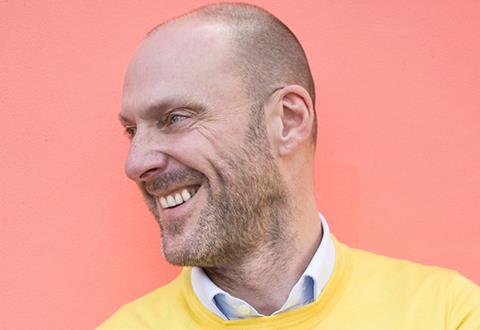
Martyn Evans is creative director of Landsec and chair of the London Festival of Architecture







2 Readers' comments