





Seven years after Goldsmith Street made history, Lion Green Road’s Stirling Prize win puts council housebuilding back in the spotlight and reopens an older debate about modernist urbanism and the place of the apartment in British housing
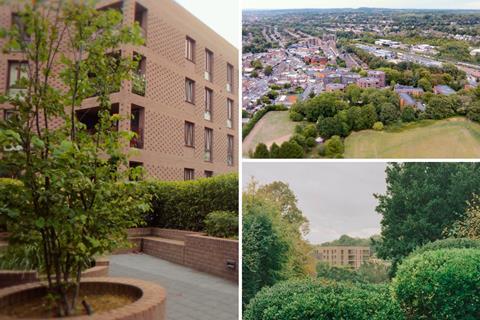
The Stirling Prize is often used to make a political statement, and the choice of Mary Duggan Architects and RUFFARCHITECTS’ Lion Green Road comes at a challenging moment for Britain’s housing sector and the stuttering council homes renaissance. Seven years after Mikhail Riches’ Goldsmith Street became the first council housing scheme to win the Stirling, this year’s award once again signals the judges’ support for public sector housing delivery.
It arrives as council housebuilding returns to the top of the political agenda. Prime minister Andy Burnham has pledged the biggest council housebuilding programme since the post-war era, but delivery figures reveal the scale of the challenge.
At the high point in 1953, councils completed nearly 200,000 homes, and even in the late 1970s town halls were building more than 110,000 a year. In 2025, councils directly delivered just 1,970 new-build homes, a figure that has hovered around 2,000 a year for the past decade. Including acquisitions from private developers, the number of newly provided council homes rose to 10,480 in 2024/25 (according to MHCLG figures referred to by Building Design’s sister title Housing Today this week).

Rising construction costs, layers of regulation and the requirement to reflect land values in development calculations mean many council schemes no longer stack up financially. The government recently announced the first phase of its £39bn Social and Affordable Homes Programme, with a significant amount going towards trying to unlock council housing delivery.
Lion Green Road’s own history shows how contested municipal housebuilding can be. The scheme began life under Brick by Brick, the housing company Croydon Council launched in 2016 to accelerate the delivery of new homes across the borough, and which for a time was lauded by housing professionals and architects alike. In November 2020 Croydon Council effectively declared itself bankrupt, and Brick by Brick was subsequently wound up. The company’s legacy continues to divide opinion, which makes this year’s award all the more pointed.
The message is clear: look what can be achieved when the public sector is allowed to be ambitious and plan for the longer term
By awarding it the Stirling Prize, RIBA is presenting Lion Green Road as a riposte to those who are ideologically opposed to the public sector delivering new homes. The message is clear: look what can be achieved when the public sector is allowed to be ambitious and plan for the longer term.
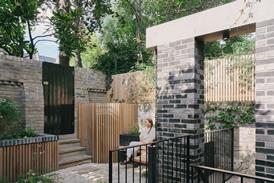
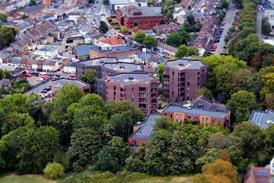
There is also, of course, the architecture itself. Lion Green Road shows how relatively high-density housing can be delivered on a suburban site without resorting to high-rise development. Stepping up across the site’s steep changes in level, the five blocks are carefully arranged to create a coherent composition in which buildings and landscape are conceived as a single whole.
Anyone who knows post-war council housing will recognise some familiar influences. Duggan calls her approach “progressive”, but Lion Green Road draws heavily on a modernist tradition that favours freestanding objects in a communal landscape over conventional street frontages.
Duggan presents this as a virtue and as innovative new thinking, a claim that underplays how much it owes to post-war precedent. Yet whether this represents a truly progressive model remains open to debate. Much post-war council housing was organised as freestanding blocks set within loosely defined landscape, with porous edges and spaces that were neither fully public nor fully private. Lion Green Road revisits aspects of that tradition.
But history suggests there can be a risk in such an approach. Spaces without clear ownership or purpose can end up belonging to no one. The project’s landscape-led planning is elegant, but landscape and urbanism are not the same thing. Most urbanists now accept that strong urban places are usually defined by streets, legible frontages and clearly defined thresholds rather than standalone buildings arranged in open space.
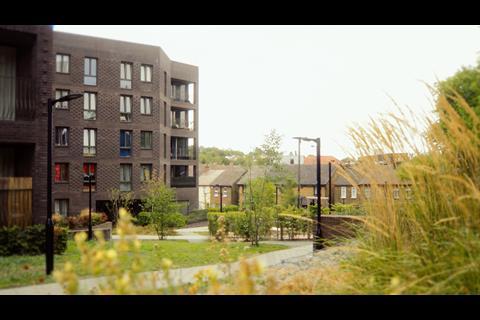
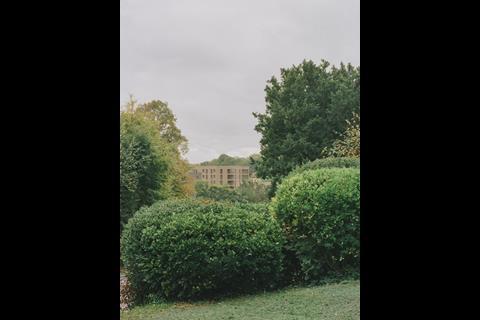
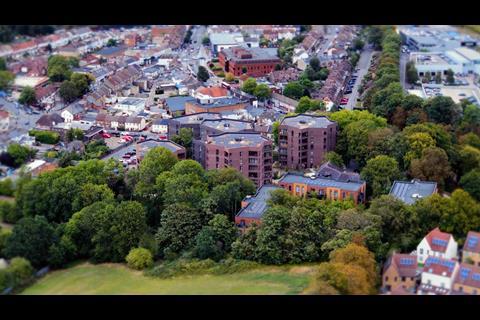
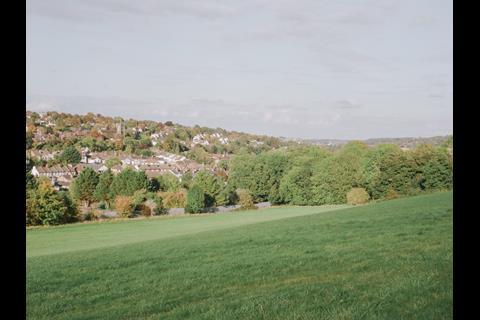
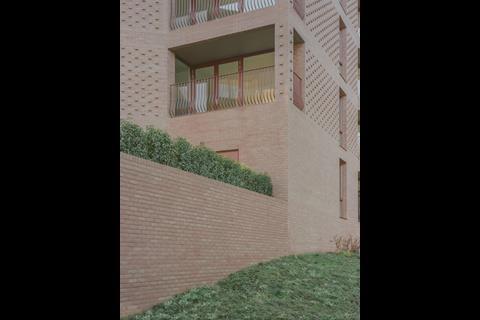
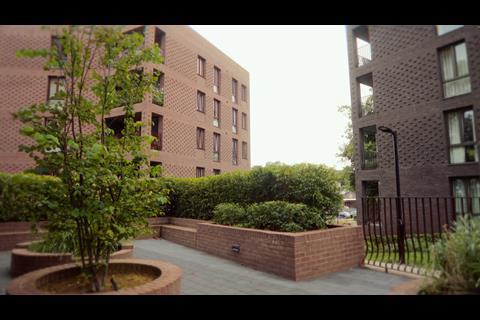
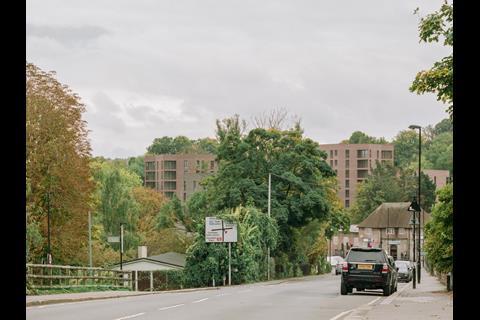
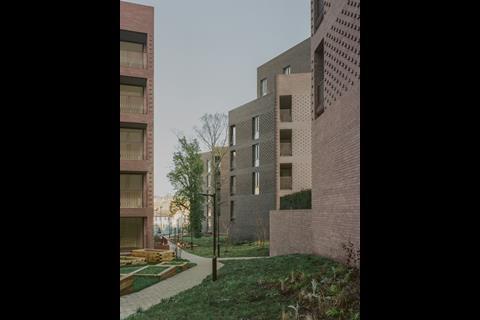
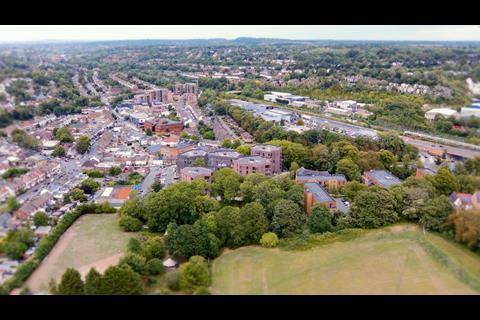
What’s been achieved here is arguably another stab at some rather old-fashioned modernist urbanism. As has been seen elsewhere, the success of such developments very much depends on the on-going maintenance of the buildings and grounds, and an ability among residents to collectively own and care for their shared environment. Much will depend on the management arrangements and attitudes of those who live there. I suspect success here will rest on residents willing to take on the shared responsibility this kind of development demands.
As a nation, we need to rediscover the virtues of apartment living: denser neighbourhoods, better public transport, more walkable communities and more efficient use of scarce land
One aspect of Lion Green Road that all architects should be celebrating is the refreshing way in which Paul Ruff’s RUFFARCHITECTS have been given equal billing as delivery architect. Ruff, who worked for practices including Ian Ritchie Architects before establishing his own studio, has built a strong reputation in his own right. Delivery architects are too often overlooked when awards are handed out, despite the critical role they play in translating designs into built reality. The quality of finishes and detailing here is impressive, and clearly result from close collaborative working between both architects and the wider project team.
Perhaps Lion Green Road’s most important contribution to the current housing debate is that it reminds us of the value of high-quality flatted development. Over the past decade there has been a marked collapse in demand for apartments, a trend accelerated by covid and the desire among many households for a private garden.
The consequences of our national aversion to apartments are evident in the depressing and environmentally calamitous sprawl that surrounds so many British towns. We continue to sacrifice countryside to an ever-expanding subtopia of cul-de-sacs, distributor roads and low-density housing, while many of our urban centres struggle to attract residents and investment. For all the political arguments about housing numbers, not enough attention is given to the type of housing we are building and the long-term consequences that choice has for the shape of our built environment.
As a nation, we need to rediscover the virtues of apartment living: denser neighbourhoods, better public transport, more walkable communities and more efficient use of scarce land. That requires good exemplars capable of challenging the assumption that flats are not how the British want to live. Lion Green Road presents one response to this challenge. Whether it will convince anyone beyond those already predisposed to agree is a more difficult question. The future of housing in Britain will depend on whether schemes like this can win over not just architects and planners, but the wider public too.
Project team
- Design architect Mary Duggan Architects
- Delivery architect RUFFARCHITECTS
- Contractor CField Construction
- Landscape architect Mary Duggan Architects with Planit-IE
- Structural engineer Symmetrys
- Structural engineer JFP
- Environmental / M&E engineer Max Fordham
- Environmental / M&E engineer DMO Electrical Services
- Environmental / M&E engineer NRG Consulting
- Quantity surveyor / cost consultant Cast Consulting
- Planning consultant DP9
- Interior design Grounded
- Client/developer Croydon Council / Brick by Brick
Postscript
Ben Flatman is a contributing editor for Building Design





3 Readers' comments