







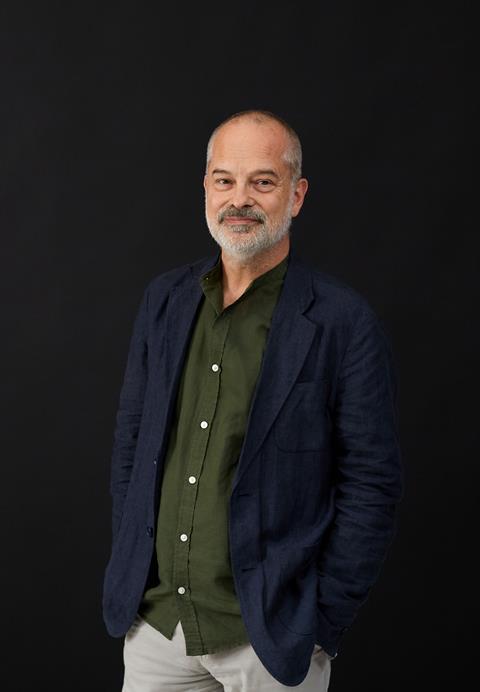
Nigel Ostime has recently been appointed as the new master of the Architects Livery Company. He believes centuries-old institutions still have a valuable role to play in bringing people together around a shared profession
To be perfectly honest, I never thought I would become a member of an organisation with the word “worshipful” in its title.
It sounds archaic. Perhaps even a little crusty. But 10 years ago I joined the Worshipful Company of Chartered Architects (the architects’ livery company) and found something rather more progressive than the name suggests.
Last month I became its master, which has caused me to think rather harder about something that extends well beyond this one organisation: what is the purpose of professional institutions in 2026?
It is an important question because, like many other things in life, architecture is changing fast. Housing delivery is in crisis, climate resilience needs immediate action and regulation has transformed the responsibilities of the profession.
Technology, particularly AI, is fundamentally challenging assumptions about what architects actually do. Skills are changing and business models are under pressure. Public trust in professions and institutions cannot simply be taken for granted.
Under these circumstances it is tempting to conclude that old institutions need to become less old. But I think that would be the wrong conclusion.
One of the most interesting things I discovered when talking to younger members of the company was that they did not necessarily want less tradition. They wanted to understand what the tradition was for.
That distinction matters. Ceremony can look nonsensical – even preposterous – if nobody explains its meaning. Fellowship can sound hopelessly old-fashioned until you discover that what younger professionals are crying out for is somewhere to meet people outside their immediate workplace.
The passing of knowledge between generations can sound paternalistic until you realise how many people in the middle of their careers suddenly find themselves managing businesses, people and extraordinarily complicated projects with surprisingly little support.
The livery companies worked out several hundred years ago that bringing people together around a shared profession, combining sociability with service and expecting one generation to help the next, was quite a good idea
The centuries-old customs of the City of London livery movement – fellowship, education, philanthropy and the transmission of knowledge – are remarkably contemporary. Many organisations are now trying to manufacture exactly those things.
Companies spend fortunes trying to create networks, professional bodies devise mentoring schemes, employers worry about belonging and conferences promise communities. LinkedIn offers us thousands of connections while somehow leaving many people feeling less professionally connected than ever.
The livery companies worked out several hundred years ago that bringing people together around a shared profession, combining sociability with service and expecting one generation to help the next, was quite a good idea. We shouldn’t be embarrassed by that. We should make better use of it.
Some practices are brilliant at supporting people through that transition. Others inevitably have fewer resources. Either way, there is surely a role for professional networks that sit outside individual employers
There is a particular opportunity in architecture. As a profession, we understandably concentrate enormous effort on education and entry. We talk about students, apprenticeships, routes into architecture and the difficulties faced by young architects. But there is another group we talk about rather less: the people in the middle.
These can be some of the hardest years of an architectural career. You may suddenly be leading teams, winning work, managing clients, carrying commercial responsibility and making decisions which affect other people’s careers. At the same time, life outside work is often becoming more complicated too. Where exactly do you learn how to do all that?
Some practices are brilliant at supporting people through that transition. Others inevitably have fewer resources. Either way, there is surely a role for professional networks that sit outside individual employers – places where experience can be shared candidly and relationships can develop over years rather than during a two-hour networking reception.
And that exchange should not travel in only one direction. The caricature of mentoring is the wise older professional dispensing accumulated knowledge to the grateful youngster. The reality ought to be much more interesting.
A 55-year-old architect may know a great deal about clients, buildings, politics, practice and the thousand things that can go wrong between drawing board and completion. A 25-year-old may understand emerging technology, changing social attitudes and new ways of working far better. Put them together and both should leave knowing something they didn’t know before. That, to me, is what a living professional institution should do.
There is also a wider civic responsibility here. Architecture cannot retreat into conversations with itself. The enormous challenges facing the built environment – housing, climate adaptation, social value, infrastructure and the quality of the places we create – require professions to participate actively in public life.
Livery companies have a particular opportunity because they bring professions together. Architects talking only to architects will solve rather less than architects talking to engineers, surveyors, planners, constructors, financiers, lawyers and others involved in shaping places. Again, an ancient structure turns out to offer a surprisingly useful contemporary network.
Tradition cannot become an excuse for exclusivity or inertia. But neither should modernisation mean taking away everything distinctive
If an organisation wants to claim relevance, it must demonstrate it. It should ask who is missing from the room. It should remove unnecessary barriers to participation, make pathways into membership clearer, be transparent about what it is trying to achieve and prepared to measure whether it is succeeding.
Tradition cannot become an excuse for exclusivity or inertia. But neither should modernisation mean taking away everything distinctive until every professional organisation becomes another networking club with a website and an annual conference.
My theme for the year is “Embracing Tradition, Adapting to Change”. The more I have thought about those words, the less contradictory they seem.
Temple Bar, where the Company meets, provides a rather nice metaphor. Designed by Christopher Wren in the 17th century, it is now standing in its third location. It has survived not because nobody dared touch it, but because successive generations found ways of adapting it while recognising that there was something worth preserving. There is an embodied-carbon lesson in there somewhere.
And perhaps there is also a lesson for our professional institutions. The question should not be whether they are old; it should be whether the ideas they embody are still useful. And fellowship, education, generosity and one generation taking responsibility for the next do not strike me as obsolete ideas.
If anything, architecture could probably do with more of them.
Postscript
Nigel Ostime is a consultant at Hawkins Brown and the new master of the Architects Livery Company







No comments yet