

Finalist for One Off Small Project of the Year Award 2025, Wellstudio Architecture guides us through the specification challenges present at Perry Vale House
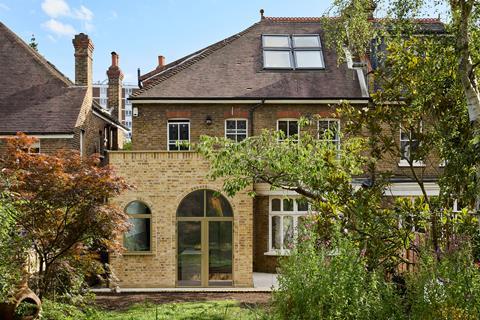
Wellstudio Architecture was shortlisted for last year’s AYAs, as the practice was named a finalist for One Off Small Project of the Year.
In this series, we take a look at the team’s entry project and ask the firm’s director, Tom Manwell, to break down some of the biggest specification challenges that needed to be overcome.
What were the key requirements of the client’s brief? How did you meet these both through design and specification?
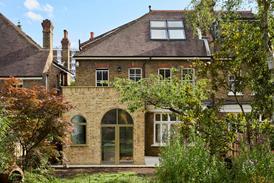
The clients sought to transform their Edwardian home into a light-filled, family-focused environment that respected the arts and crafts heritage while introducing a bold, contemporary extension. The original house is part of a group of houses built by renowned local builder, Ted Christmas, located within the Perry Vale and Christmas Estate Conservation Area. His homes are regarded for their high-quality craftsmanship and decorative external joinery, with Christmas’s pervasive style felt throughout the Perry Vale area.
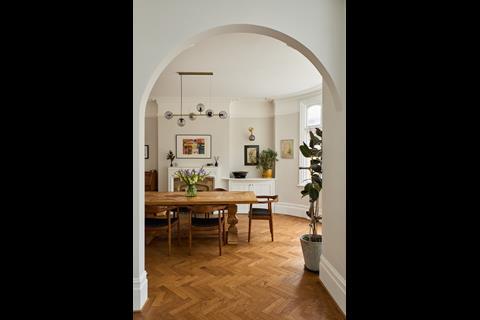
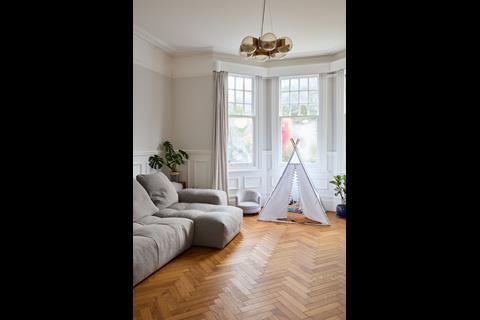
The brief therefore centred on creating open, connected spaces with an improved flow between kitchen, dining and living areas, drawing daylight deep into a north-facing rear elevation, and enhancing the sense of wellbeing within the home.
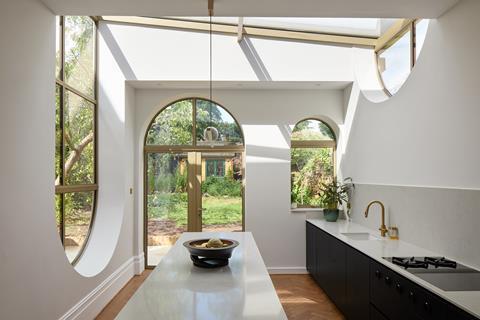
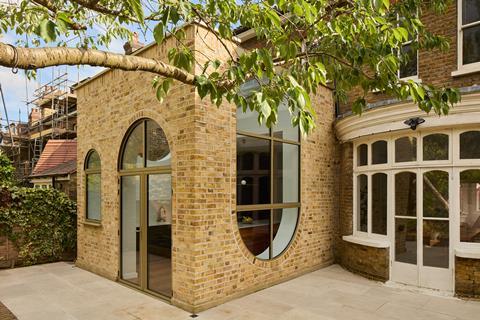
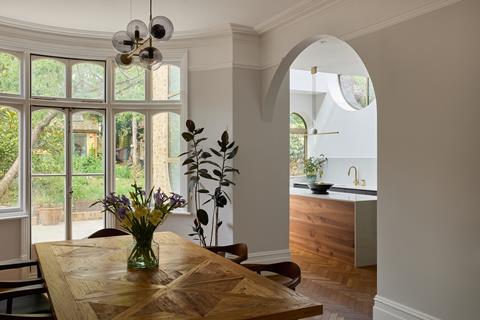
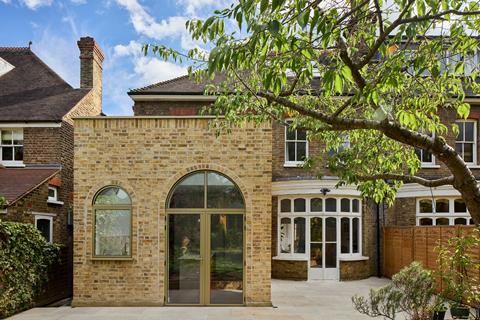
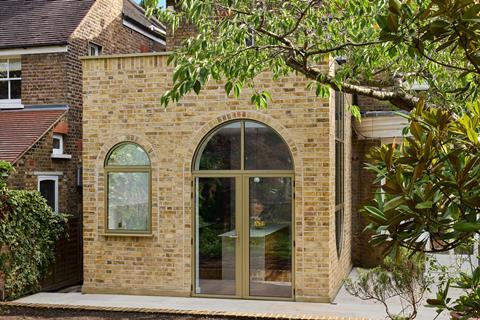
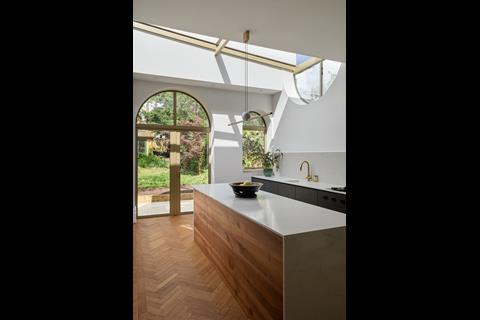
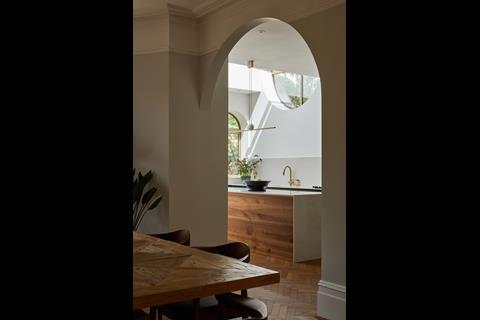
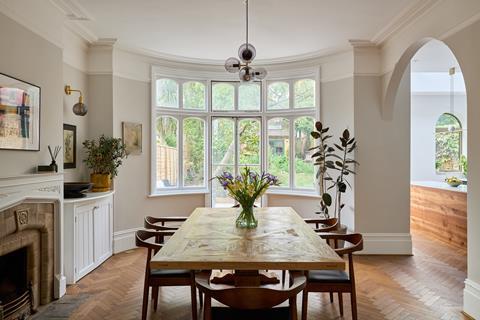
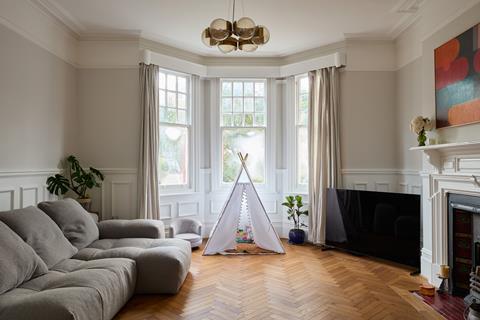
Our design responds through a masonry extension articulated by a series of arches – both upright and inverted – that reinterpret the curved bay windows of the original house. Specification choices supported this ambition: reclaimed London stock bricks and lime mortar ensured contextual sensitivity and sustainability; bronze-toned aluminium glazing by Chigwell Windows provided slender yet durable frames; and herringbone timber flooring by Chaunceys introduced warmth and tactility. Internally, natural materials and a neutral palette – including a timber-clad kitchen island, marble worktop and contrasting cabinetry – create a calming environment aligned with the clients’ values of wellbeing, family life and heritage respect.
What were the biggest specification challenges on the project and how were these overcome?
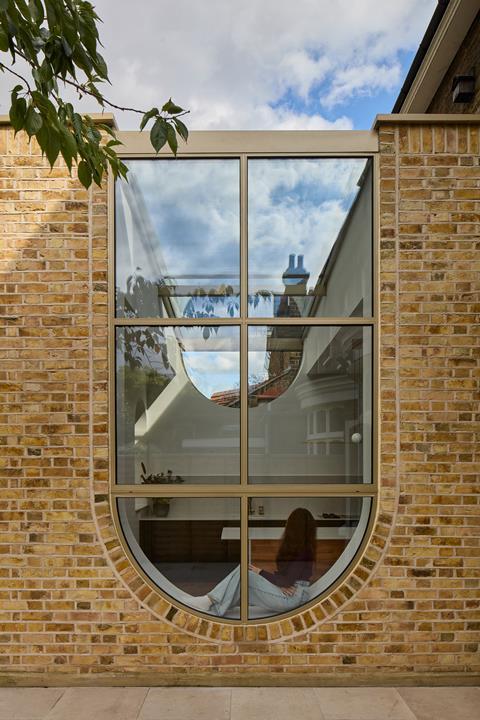
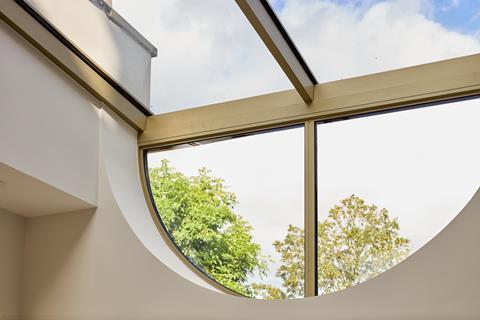
The most significant challenge was the bespoke glazing which was developed in partnership with Selcom (the main contractor) and Chigwell Window Company. The extension’s distinctive inverted arched windows required non-standard specification and detailing, with structural, thermal and installation complexities that delayed the programme by several months.
Chigwell Windows had to source the non-standard glazing elements from different sub-contractors within their group, in which one of the sub-contractors announced a significant delay, which unfortunately brought the project to a halt. Following a few other bumps in the road, including colour choices, the entire suite of glazing had to go back and be re-sprayed. To say that our clients were relieved at finally having the glazing installed would not be an understatement.
Another challenge externally was integrating sustainable, breathable materials into a conservation setting without compromising performance. The use of white coloured Elm Cragg hydraulic lime mortar alongside reclaimed London stock bricks balanced longevity with compatibility to the original structure as well as giving the mortar joints an expressive appeal.
Internally, working on bringing a variety of materials together in a harmonious colour palette and series of finishes was something which we worked hard to get right through the use of a number of sample rounds and in-situ sample testing.
What are the three biggest specification considerations for the project type? How did these specifically apply to your project?
Compatibility with heritage fabric: Extensions to period houses require materials that sit harmoniously alongside the existing character. For Perry Vale, this meant using high-quality joinery, reclaimed bricks and lime mortar to ensure the new extension felt like a continuation of the Edwardian craftsmanship, and in keeping with the Perry Vale and Christmas Estate Conservation Area.
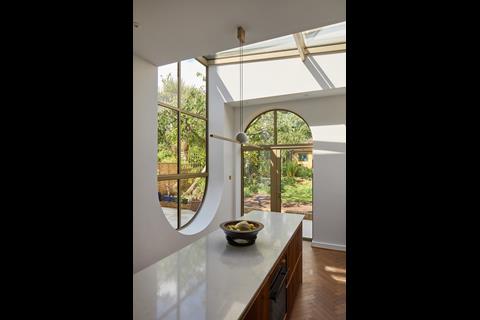
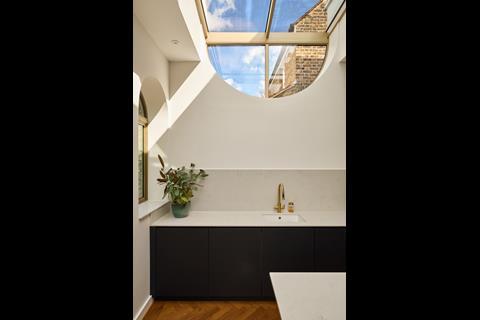
Light and wellbeing: North-facing extensions demand careful specification of glazing and finishes to maximise daylight. We introduced a full-width skylight, inverted arches and carefully selected surface finishes ensured that natural light penetrates deep into the home, transforming previously dark spaces.
Sustainability and comfort: Achieving energy efficiency and wellbeing meant specifying natural, low-toxicity materials and upgrading insulation, heating and flooring. FSC-certified timber flooring, breathable mortars and underfloor heating combined to deliver a warm, healthy interior environment.
Do you have a favourite product or material that was specified on the project?
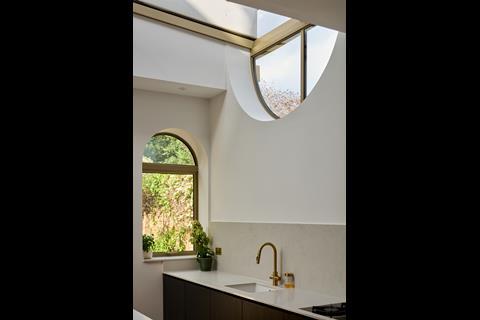
The inverted arched glazing developed in coordination with Chigwell Windows stands out as the most distinctive and transformative element. It’s a playful reinterpretation of traditional forms, combined with the technical achievement of detailing and installation. I love how it creates a focal point and moment of drama that captures both light and views.
We worked a lot on the colour choice for the arched windows, testing out different tints using RAL colours and beyond until we found a shade somewhere between bronze and gold – not too bling, not too dark – which perfectly complimented the brick and flooring colours.
Are there any suppliers you collaborated with on the project that contributed significantly? And what was the most valuable service that they offered?
Several suppliers played an important role in realising the project vision. Chigwell Windows provided the bespoke arched and inverted glazing, bringing technical expertise and design development support to one of the project’s most challenging and distinctive features. Alumasc supplied durable aluminium rainwater goods that were carefully selected for their performance and sensitivity to the heritage setting. Chaunceys Flooring delivered high-quality timber flooring, which set the tone for the interiors and brought warmth and tactility to the living spaces. Meanwhile, Elm Cragg (Lime Mortars UK) ensured compatibility and breathability in the brickwork through the specification of hydraulic lime mortar.
Of these collaborations, the most valuable contribution came through the flexibility and problem-solving offered by Chigwell Windows. Their willingness to refine and adjust the glazing solutions made it possible to achieve the design intent despite the technical complexity of the bespoke arched openings.
What did you think was the biggest success on the project?
The biggest success is the way the extension has transformed daily life for the clients. Previously dark, disconnected rooms have become light-filled, uplifting spaces. The specification of natural materials and tactile finishes enhances this quality, ensuring the house feels grounded, warm and timeless.
The arched glazing – dramatic yet sympathetic – embodies the project’s ambition: to reinterpret arts and crafts traditions in a contemporary, wellness-led way.
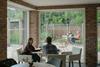
For Nic and Hayfa, the change has been tangible: “Now it’s so bright in here, we’ve even managed to keep a bird of paradise alive – it feels as though the house itself has been given new life.” The new skylight and inverted arch windows have redefined their experience of the home, as they describe: “As the sun rises, we’re often already up with our toddler and can now track the light along the skylight, something the old kitchen never allowed. The window seat created by the upside-down arch has become our favourite spot in the house, a serene place to sit and look out into the garden.”
Project details
Architect and interior designer Wellstudio Architecture
Structural engineer AMCENG Structures (Alan McVicar)
Quantity surveyor Tim Pearce QS
Planning consultant None
Main contractor Selcom Building Services
Building control Quadrant Building Control
Glazing Chigwell Windows
Kitchen Puccini Kitchens
Lighting RB12
Mortar Elm Cragg Hydraulic Lime Mortar by Lime Mortars
Bricks Reclaimed Yellow London Stock
Flooring Chaunceys
Rainwater goods Alumasc
Local authority London Borough of Lewisham
Our “What made this project” series highlights the outstanding work of our Architect of the Year finalists. To keep up-to-date with all the latest from the Architect of the Year Awards visit here.

No comments yet