






Decision could complicate plans by Hopkins to refurbish the building

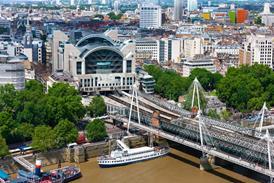
Terry Farrell’s Charing Cross Station building has been listed at grade II months before a Hopkins-designed proposal to refurbish the site was due to be decided by Westminster council.
The Department for Culture, Media and Sport has granted the 1980s building, called 1 Embankment Place, protected status following a campaign supported by the Twentieth Century Society.
It is understood that the campaign was originally triggered by an application for immunity from listing by developer Bridgmont, which submitted plans to refurbish the building last month.
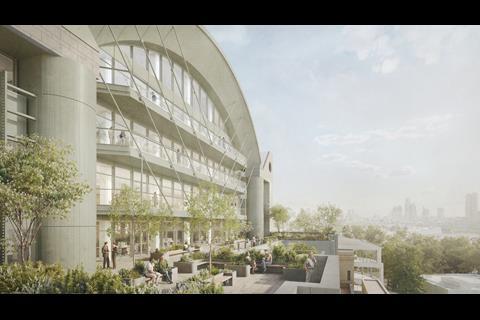
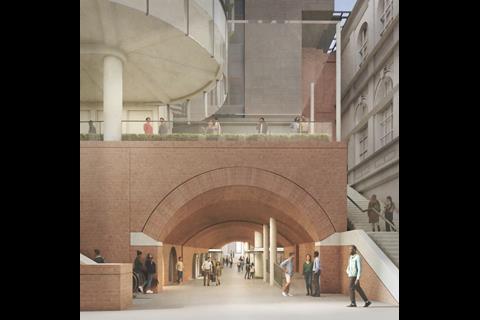
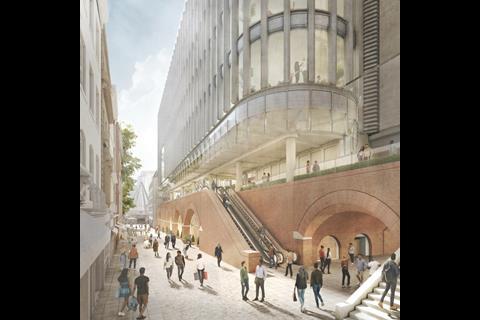
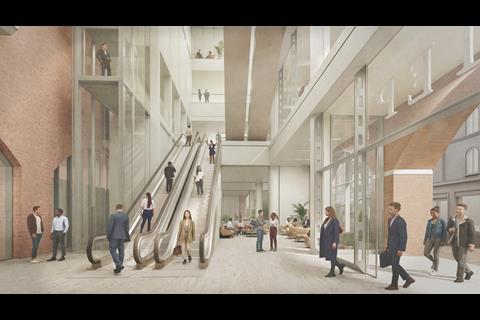
Building Design understands Bridgemont is considering its next steps in light of the government’s decision to list the site with options potentially including design changes to the version of the scheme submitted.
The current proposals for the building, which contains the headquarters of PwC, would retain around 90% of its existing structure including most of its facade, while improving its energy efficiency and operational carbon usage.
The completed scheme would be all-electric and “fully decarbonised”, reducing the site’s operational energy use by 70%, according to the project team.
Bridgemont has previously said the refurbishment would retain the ”distinctive character and design intent” of the 15-storey block, which was completed in 1991 and occupies a highly prominent position on the curve of the river Thames which is visible from across central London.
Terry Farrell’s son Max Farrell, whose firm LDN Collective is working with Hopkins on the scheme, is said to be aiming to ensure the “essence of the original design is respected and intelligently adapted for a contemporary city context”, according to the project team.
Historic England’s listing report describes the building as “one of the most prominent, architecturally ambitious schemes ever designed by [Terry] Farrell” while praising the “heroic formal imagery of its stepped arches and towers, balanced with the pattern, texture and modelling which bring human scale”.
C20 said it was “delighted” the building had been listed, calling it the “most ambitious in a wave of air rights developments of the period that conjured office space over London rail termini”.
However, the campaign group criticised a number of carve-outs in the listing, including the elevation on Villiers Street elevation and the bridge facings and portals on the Embankment Place underpass.
The exclusions could provide Bridgmont with some breathing space in any future listed building consent application for the scheme, which had included changes to parts of the building which remain unlisted.
Historic England’s listing report described the Embankment Place underpass as an “essential part” of the building, but concluded the elevation on Villiers Street was “not as successful” and appeared as a separate element to the rest of the scheme.
Terry Farrell, who died last year aged 87, was one of the leading figures in British postmodernism during the 1980s and 1990s. His other major projects include the MI6 headquarters in Vauxhall.
Bridgemont and Hopkins have been approached for comment.




No comments yet