




Foster + Partners founder said there was a ‘massive communication gap’ on the benefits of zero-carbon nuclear power
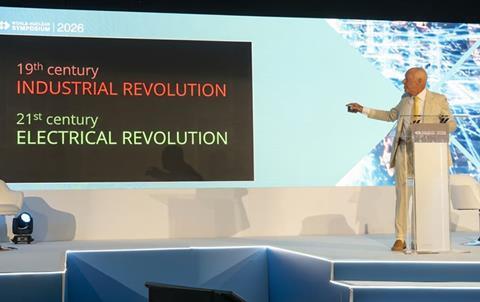
Norman Foster has called for a nuclear “revolution” to combat climate change as he argued that the proliferation of renewable energy sources including wind and solar threatened areas of natural beauty.
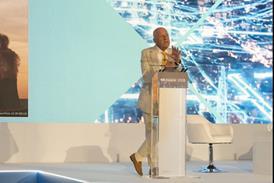
Delivering a keynote speech to 1,200 people at the World Nuclear Symposium last Thursday, Foster told nuclear industry leaders and policy makers that people “act on emotion” when opposing nuclear power due to perceived risks.
He said there was a lack of knowledge of the safety of nuclear power compared to other energy sources, adding that governments needed to “overcome misconceptions” and embrace advanced nuclear systems.
Foster claimed a dependence on renewables was “posing a threat to the very environment that we are trying to preserve”, highlighting a windfarm in the Hebrides covering an area equal to a third of Greater London and containing wind turbines taller than the Eiffel Tower.
Outlining his vision of industrialised nuclear power as a source of zero-carbon energy, Foster said the approach could “enable us to achieve a better balance between powering our society and protecting nature’s ecosystems.”
“The high energy density of nuclear means that its footprint on our landscape and habitat is tiny compared to the vast amount of power it can produce,” the Foster + Partners founder said.
“The proven reliability of reactors is high, and they only require relatively low maintenance. In its seventy-year history nobody has died from nuclear waste, which is miniscule and can now be partly reused.
“Nuclear is zero carbon and the data shows that by a vast margin it is the safest way of generating power. These facts are not widely known so it is not surprising that people act on emotion – there is a massive communication gap to be addressed.”
Foster said the green energy revolution of the current century should be a holistic combination of all means of power generation available, including wind and solar, but “in their rightful places”.
He said: “On buildings, solar panels can be seamlessly integrated into facades and roofs, wind turbines located away from areas of natural beauty, existing and new nuclear power stations with their transmission grids – but above all a massive injection of a new generation of industrialised nuclear power units that can be independent from the grid and linked directly to the sources of power demand.”






3 Readers' comments