







Louise Haigh speech to CBI also promises ’steps to make housebuilding faster’ in coming weeks
Natural England, the Environment Agency and other arms-length bodies could be dissolved in a bid to make public decision-making smoother and more accountable, according to a senior government minister.
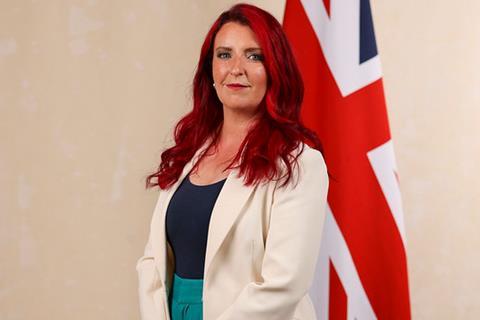
Cabinet secretary Louise Haigh made the announcement in a speech opening the Confederation of British Industry’s (CBI) annual conference this morning.
Haigh, who is widely seen as one of the prime minister’s closest advisers, gave a wide-ranging speech on public control, a topic she noted might feel “counterintuitive” to her business audience, asking them to “suspend that scepticism”.
She praised the UK for its successes in innovation, its top-quality universities and its high level of technology investment, arguing that “our frontier isn’t the problem, it’s our foundations”.
Haigh said that more public control was needed to solve foundational problems such as the cost of energy, housing and transport, as well as the unevenness of the economy and inefficiency of the state.
She spoke of “how concentrated power and decision-making are, and yet how weak, how slow, and even obstructive our institutions and Westminster politics can be. So much grit in the wheels.”
“Every day you spend filling in new forms to export, waiting for a planning consent or a grid connection, is a day your capital sits idle and you are not bringing in revenue”.
Haigh said that part of Burnham’s plan to rewire the state was the reform of “unelected regulators and arm’s-length bodies”, to which the country had seen “accountability outsourced”.
“We will take a look at each of their functions and pose the challenge: what should be devolved, what can be dissolved and what could be delivered to departments,” she said.
“We’ve already begun that process with the Environment Agency, Natural England, Ofwat and the Drinking Water Inspectorate”.
Some of these have been responsible for policy-making that has caused frustration within the development sector and several also historically play a role as consultees in the planning process.
“Where decisions are intrinsic to the fabric of a place, those powers and responsibilities must be made in that place, not in Whitehall,” Haigh added in a nod to the government’s devolution agenda.
Haigh’s speech also mentioned reforms to social value rules in procurement, which she said had “become a coat hook for every government issue” which pushed the term “to the point of being meaningless”.
She also noted the UK’s poor performance in housing, noting that Britain spent the largest proportion of its GDP on housing allowances.
She pointed out that “hundreds of thousands of homes” could be built on “millions of acres of land” owned by the state, while stressing that the state could not do this alone.
“A strong private market means more social rent homes, and a weaker one means fewer,” she said.
“So when conditions become as difficult as they are now, that’s a shared problem, and we’ve heard the call to act.
“There’s no silver bullet, but over the coming weeks we will set out steps to make the system faster, reduce uncertainty and tackle costs.”







No comments yet