





Our pick of the best interviews from the past 12 months
Throughout 2025, Building Design brought you exclusive interviews with the biggest names in architecture. Here is a selection of our best interviews from the past 12 months.
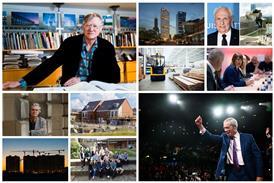
Jack Pringle: ‘If the RIBA didn’t exist, you’d have to invent it’
Published in November

Jack Pringle has spent much of his career closely connected to the Royal Institute of British Architects. His involvement began early, when he was elected to the council in his twenties. A second spell came with his presidency between 2005 and 2007. He returned again in 2020, at what he describes as “a moment of necessity,” and is now three years into his second term as chair of the RIBA board.
“We were losing quite a lot of money, so I had to stabilise the budget, which we did,” he recalls of that return. “Of course that meant downsizing the staff, which is never easy or popular.”
But the financial crisis was only one part of the picture. “I was acutely aware that the position of the architect in the construction industry is not what it should be,” he says.
‘I want the most beautiful and future-ready buildings in the country’… The City’s new planning chair shares his vision for the Square Mile
Published in June
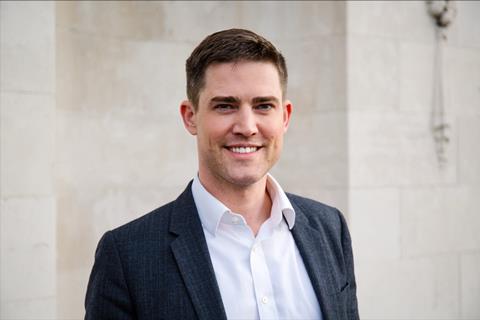
Tom Sleigh has a bombshell to deliver. Weighing his words carefully, the newly appointed chair of the City of London’s planning committee declares: “I think the time of sky gardens is probably passing.”
It is a statement which may not go down well with many of the capital’s architects and planning consultants. Sky gardens have, in recent years, been a go-to cultural element in big City schemes, employed by project teams to gain the favour of the City’s planning committee. But Sleigh believes they do not provide any real benefit for office workers, the main users of these buildings. “Real gardens are back,” he claims.
BD met Sleigh at the recent UKREiiF event in Leeds. He was there to network with developers and drum up interest in the “destination city” plan, which aims to diversify the City’s economy with more varied cultural offerings.
Chris Williamson: ‘Architects are burying their heads in the sand on AI’
Published in October
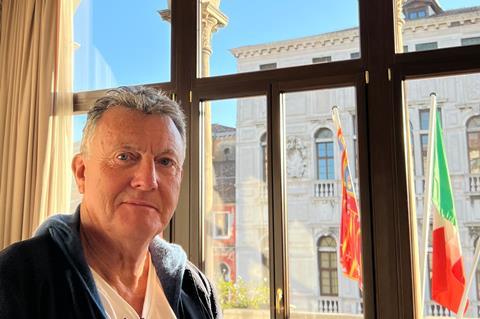
“In my mind, Richard Rogers is more like Leonardo and Norman is more like Michelangelo,” says Chris Williamson. He is talking about his award-winning stage play, Legacy, which is about the rivalry between the two renaissance masters. It is also about rivalry in general, particularly when it concerns great artists – including Rogers and Foster.
Williamson started writing the two-hour historical drama during the covid lockdown, and in February sent it to the Script Awards in Los Angeles, where it won Best Stage Play. Later that month it was named Best Feature Script at the Cannes Arts Film Festival, an online competition dedicated to promoting independent film.
Now the WW+P co-founder has been elected RIBA president, beginning his term in September this year. His successful foray into playwriting makes him one of the few high-profile architects to receive recognition for work outside the architecture and design professions. He joins a small circle including former RIBA president Maxwell Hutchinson, who composed three musicals and a requiem mass.
1.5 million homes and counting: what Jas Bhalla thinks comes next
Published in April

Nine months into its first term, the Labour government remains under pressure to prove it can meet its flagship pledge: the delivery of 1.5 million new homes over five years. Planning applications are at historic lows and, despite a string of policy reforms, the housing pipeline remains stubbornly slow to pick up.
The scale of the task is compounded by the lessons of history. Previous bursts of rapid housebuilding left behind mixed legacies. Poor public realm, car dependency and inadequate social infrastructure have been recurring themes when design has taken a back seat to numbers. A key question now is whether the current housebuilding drive can avoid repeating those mistakes.
For Jas Bhalla, an architect and planner who leads Jas Bhalla Works, the stakes are clear. His training spans both disciplines – planning at the Bartlett, architecture at Yale – and his current work includes private houses, major settlements and public realm-led urban strategies.
Orms: designing architecture that listens and responds to a changing world
Published in April

When Orms Designers + Architects was founded in 1984 by architect Oliver Richards and designer Martin Shirley, it set out with a clear aim: to offer an all-round design service that would set it apart.
At a time when architects were under fire, not least from the Prince of Wales, whose “monstrous carbuncle” jibe cast a long shadow, the decision to put “designers” before “architects” in the name was more than stylistic.
It reflected a belief that architecture did not sit in isolation, and that combining interior and architectural design within a single practice could offer clients something more responsive and complete. That belief shaped the studio’s early work.
From one of the UK’s first science park buildings in Cambridge to the headquarters for fashion brand Next, Orms moved confidently between sectors. In the 1990s, it helped to pioneer loft living in London through a string of warehouse conversions with developer London Buildings, while interiors commissions for law firms, cafés and health clubs began to stretch across Europe and beyond.
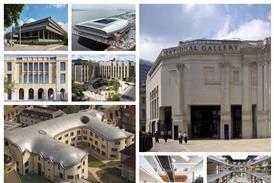
Mastering the detail: Dockyard Church with Hugh Broughton Architects
Published in March

For nearly two centuries, Sheerness Dockyard Church has stood as a testament to Britain’s naval history, its architecture reflecting the grandeur and resilience of its time. Initially constructed in 1828 to the designs of George Ledwell Taylor, the church played a central role in the lives of dockyard workers, providing a place of worship at the heart of one of the country’s great naval shipyards. However, the passage of time was not kind to the building. After suffering two catastrophic fires – one in the 1880s and another in 2001 – the church was left roofless and in ruins, its cast iron columns weakened and its masonry exposed to the elements.
The challenge of restoring this historic structure was immense, requiring a balance between conservation, innovation and functionality. Hugh Broughton, director at Hugh Broughton Architects, and Robert Songhurst, associate at Hugh Broughton Architects, explain that every design decision needed to respect the building’s rich past while ensuring its future sustainability.
As his RIBA presidency ends, Muyiwa Oki reflects on milestones and unfinished business
Published in August

Muyiwa Oki’s presidency of the RIBA has been defined by a series of firsts. He is the institute’s first salaried architect to take the role, the first black president, and also the youngest in its near 200-year history. These milestones alone make his two years in office historic. But as Oki steps down, he is keen to reflect on what has been achieved and where the profession still has work to do.
In conversation with BD, he talked about his commitment to digital innovation, his concerns over the withdrawal of government funding for apprenticeships, and the importance of workplace culture. He also highlighted moments of pride, including the awarding of the Royal Gold Medal to Lesley Lokko and SANAA, and chairing the Stirling Prize jury which selected the Elizabeth Line.
Oki insists that his presidency, which end this week, has been about broadening the conversation, from workplace wellbeing to public engagement and the value of reuse.






No comments yet