



Civilian sites across region hit by wave of attacks with Iran targeting cities including Dubai and Abu Dhabi
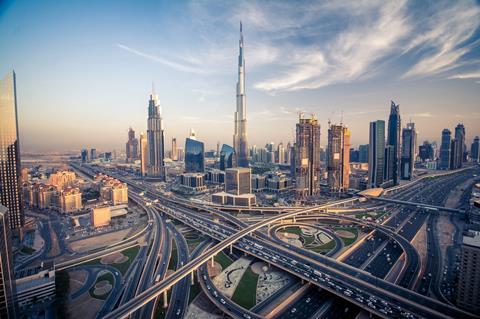
Architecture practices with staff and offices in the Middle East have said they are working with their teams to make sure they are safe following the conflict which has erupted across the region over the weekend.
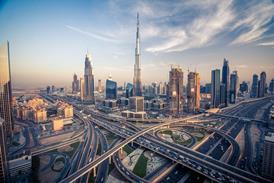
Iran has launched strikes on civilian buildings in cities including Dubai, Abu Dhabi, Tel Aviv and Beirut over the past three days in retaliation against attacks on the country by the US and Israel which started on Saturday.
Populous, which is working on a wide range of projects in the Middle East including stadiums for the 2034 World Cup in Saudi Arabia, said all of its staff in the region are “safe and accounted for”, adding that the firm is ”continuing to monitor the situation”.
Foster & Partners said: “We are formulating guidance for our teams in the Middle East.”
RIBA president Chris Williamson said the organisation had written to its members in the Gulf region and is ”maintaining close contact with colleagues and senior representatives on the ground“.
A fire has broken out near the entrance of Fairmont The Palm hotel in Dubai, after debris reportedly fell from the sky during an Iranian missile attack.
— Sky News (@SkyNews) February 28, 2026
🔗 https://t.co/ZIHVyjHiZp pic.twitter.com/IskWx4URfp
He added: ”We are considering how best to provide meaningful support to members affected by the situation, and are reviewing all international activity in light of current circumstances.
”We will continue to follow UK Foreign, Commonwealth & Development Office guidance regarding international travel.”
Williamson said RIBA’s ”thoughts and concerns are with all those affected by the ongoing conflict”.
Meanwhile, a spokesperson for Turner & Townsend said: “We are closely monitoring the ongoing developments in the Middle East.
“The health and wellbeing of our colleagues is our number one priority and we are providing them with all the support we can. We are also working with our clients across the region to help them navigate the current uncertainty.”
There were also fears this morning that the conflict could lead to a significant rise in the cost of construction materials in the UK if disruption persists.
Global oil prices jumped by 10% this morning following attacks on Iran by the US and Israel over the weekend, which have caused significant disruption to oil supplies from the Gulf region.
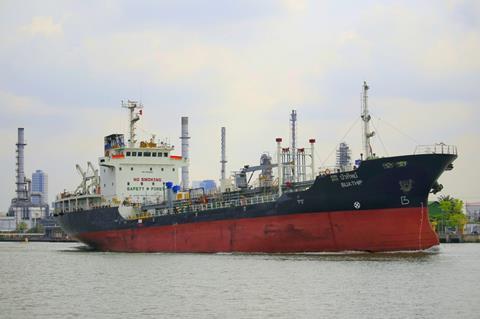
Iran has warned ships not to pass through the Straight of Hormuz, a key chokepoint at the entrance to the Persian Gulf through which around 20% of the world’s oil and natural gas supplies travel.
International shipping has come to a near standstill at the entrance of the straight after at least three ships were attacked over the weekend.
Qatar has also shut down production at the world’s largest liquefied natural gas (LNG) plant.
Construction Products Association economics director Noble Francis said higher energy prices may lead to cost increases for materials, especially energy-intensive materials such as concrete or steel.
But he said the impact on the UK industry would depend on how long the conflict lasts, with a sustained war between Iran and the US and Israel potentially leading a “significant impact on materials prices in the medium-term”.
Francis added that higher energy prices will cause an upward blip in CPI inflation, potentially resulting in a delay to interest rate cuts and for cuts to be smaller. The Bank of England had been expected to cut interest rates this month after holding the rate at 3.75% in February in a knife-edge vote.
Arcadis head of strategic research and insight said there was “great potential for a price spike” for LNG due to much shorter reserves than those which exist for crude oil.
He said the impact of this will be mostly felt in Europe, Japan and China, which are the main LNG importers. In the UK, where the price of electricity is set by the cost of gas, a spike in LNG prices could lead to a “very quick” rise in energy costs, Rawlinson said.
Andrew Hyman, partner at cost consultant Vibe, said: “It’s early days but it should be noted that this development could increase upside risks to construction costs in the London market. Primary upside risks could include the direct impact on oil prices; disruption to global shipping networks; and secondary inflationary pressure if heightened geopolitical uncertainty drives further inflation in the metals markets from investors seeking relative safe havens.”
But he added: “Recent experience has also emphasised how resourceful and resilient the construction supply chain is. We remain optimistic that these impacts will be controlled. Fundamentally, the oil market is well supplied, and global demand is relatively weak.”
The UK government is preparing for potential mass evacuation of the approximately 300,000 UK nationals who are currently in the region if the conflict worsens.
The Foreign Office said 102,000 British Citizens have registered their presence in the Middle East with the UK government, including holidaymakers and people on business visits.
Iran has carried out strikes on multiple Gulf countries including the United Arab Emirates, Qatar, Kuwait and Bahrain. One person has been killed and 11 injured in strikes at airports in Dubai and Abu Dhabi, with luxury hotels in Dubai also among sites which have been bombed by Iran.






No comments yet